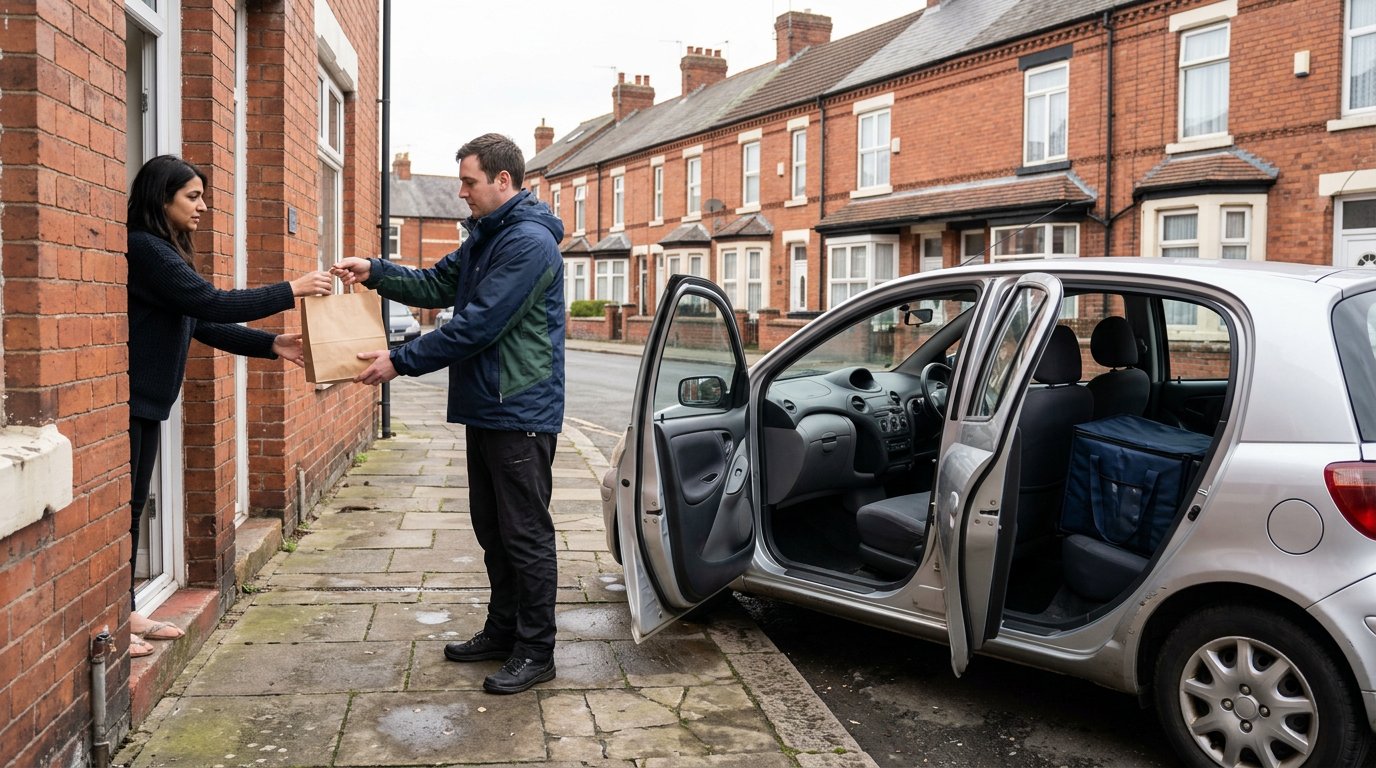
If you use your car for paid food deliveries, fast food delivery insurance for a car means having hire-and-reward cover. Standard social and commuting insurance does not cover delivery work, and the vehicle must have at least third-party insurance. This cover applies to food and parcel deliveries, but not to carrying passengers for payment, which requires taxi insurance instead.
Delivery platforms may require a certificate showing hire-and-reward use before you accept your first order. Personal car insurance alone may not meet their requirements. This guide explains how cover works for food delivery platforms, how it differs from private and courier use, and what to consider when comparing policies for your work.
Key Takeaways
- Learn how private-use and courier policies differ, so the cover reflects the journeys you make for work.
- See which details about your vehicle, delivery work and driving affect the quotes you receive.
- Understand what delivery platforms may require before you start accepting orders.
- If you employ staff, find out why employers’ liability cover may also matter for your business.
What is fast food delivery insurance?
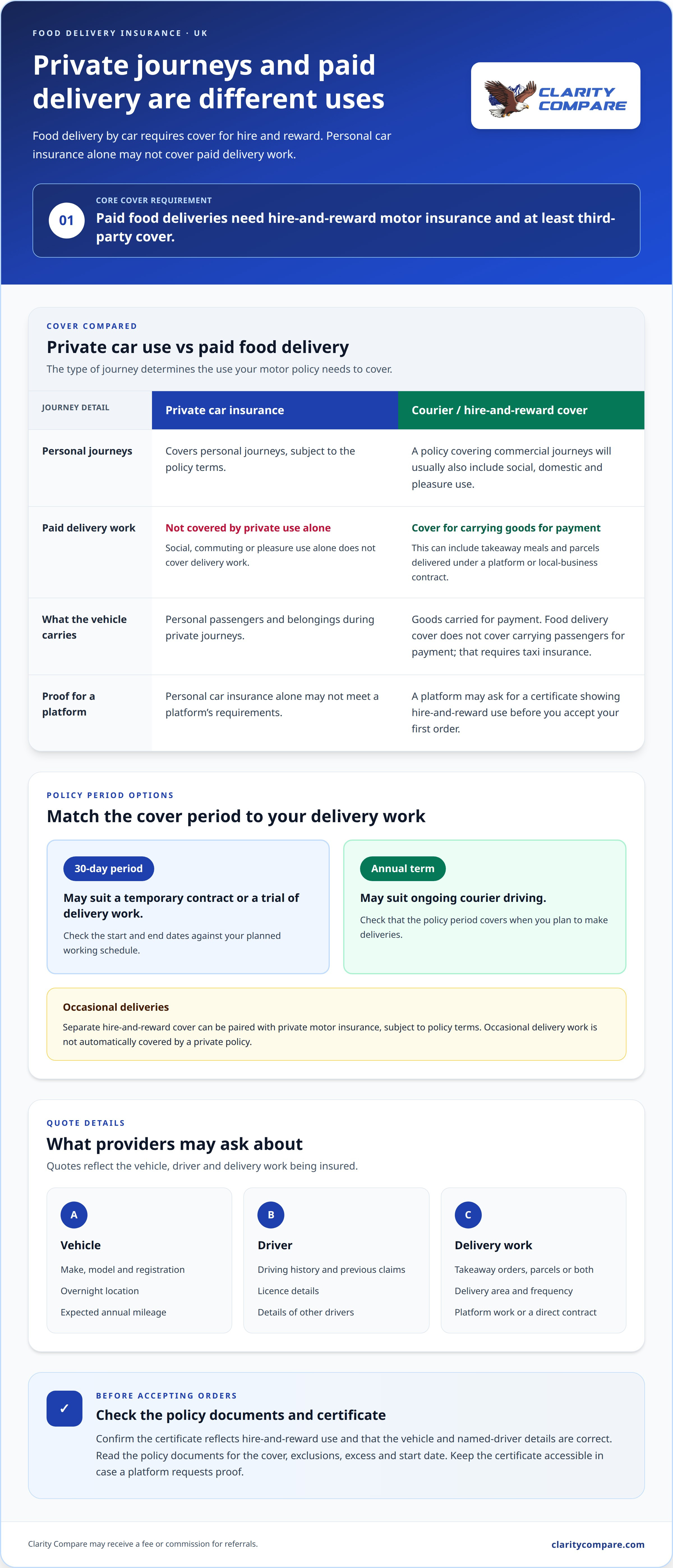
In the UK, paid food deliveries require hire-and-reward motor insurance and at least third-party cover. Social, commuting or pleasure use alone does not cover delivery work. Couriers need insurance that reflects the paid journeys they make under a delivery contract.
Hire and Reward Cover
Hire-and-reward insurance covers using your car to carry goods for payment, including takeaway orders. It’s needed when you accept delivery work for income, whether you deliver for a platform or a local business. A platform may require a certificate showing hire-and-reward use before you accept your first order. Driving without the required cover can lead to an IN10 endorsement, which stays on your licence for four years, according to the Driver and Vehicle Licensing Agency.
Carriage of Food for Hire and Reward
Carriage of goods for hire and reward means transporting items for payment. For a food courier, that means carrying meals from a restaurant to a customer in your car. The policy must cover this paid use, not just personal journeys or commuting. Fast food delivery insurance does not cover carrying passengers for payment; that work requires taxi insurance. The type of delivery, such as takeaway orders or parcels, helps determine the cover you need.
Business Use and Public Liability
Business use on its own isn’t the same as hire-and-reward cover. If you deliver food for payment, you need motor insurance that specifically covers hire and reward; adding ordinary business use doesn’t replace that requirement. Public liability insurance is separate from motor cover, so it doesn’t insure the car for delivery journeys. Whether you need it depends on your business arrangements. If you employ anyone, employers’ liability insurance is usually legally required; according to the Health and Safety Executive, failing to have it can result in a fine of up to £2,500 per day.
Difference between private and courier car insurance
Private car insurance covers personal journeys, while courier cover reflects driving to deliver goods for payment. A policy covering commercial journeys will usually also cover social, domestic and pleasure use.
Which UK insurers offer this cover? Insurers and specialist providers offer courier policies, with quotes based on your vehicle and delivery work. When comparing fast food delivery insurance for your car, give details of your paid journeys, not just your usual private driving.
Insurance Needs for Self-Employed Couriers
As a self-employed courier, you arrange cover for the car you use and the work you accept. Tell the insurer whether you deliver takeaway food, parcels or both, and whether you also use the car for personal journeys. Your vehicle, delivery pattern and driving details help providers assess the cover and terms. If someone else drives the car, their details matter too.
Courier Insurance Periods
Courier insurance may be arranged for a 30-day period or an annual term. A shorter period can match a temporary contract or trial of delivery work; annual cover suits ongoing courier driving. Compare the policy’s start and end dates with your working schedule, including any gap between private and paid journeys. For fast food delivery insurance for car use, the policy period should match when you plan to deliver.
Top-Up Cover for Occasional Deliveries
Can you get top-up delivery insurance for occasional food delivery? Separate hire-and-reward cover can be paired with private motor insurance for delivery work, subject to the policy terms. Check that the arrangement covers your car and the types of orders you carry. Occasional delivery work is not automatically covered by a private policy.
Clarity Compare provides the comparison service. Following the link forwards you to the comparison platform, and Clarity Compare may receive a fee or commission for referrals. You can compare courier insurance quotes and review the cover details alongside the policy period.
Food delivery insurance and quote factors
A delivery insurance quote reflects the vehicle, driver and work being insured. Accurate details help providers assess the risk and show what each policy covers.
Food Delivery Insurance
Providers assess factors such as the car, the driver’s record and the planned delivery work. Delivering takeaway meals locally may present a different risk from covering a wider area with food and parcels. Insurers may also consider annual mileage, previous claims and how often you use the car for deliveries. Compare the cover. Check that the policy covers your journeys and the liability protection you need. Public liability cover is separate from motor insurance, so review it separately if your work requires it.
Details a provider needs for a quote
An insurer’s quote form may ask for your car’s make, model, registration and overnight location. It may also ask about your driving history, previous claims, licence details and other drivers who use the vehicle. Describe your delivery work clearly, including whether you carry takeaway orders, parcels or both. Give your expected mileage and how regularly you drive for deliveries. If you’re self-employed, explain whether you work through a platform or under a direct contract. These details help the provider assess the risk and match the quote to your intended use.
How providers arrange a quote and issue policy documents
Providers collect your details through a quote form or application, then assess them against their policy terms. They may ask for clarification about your vehicle use, delivery area or claims history. Once you choose a policy and complete the purchase, the insurer issues documents explaining the cover, exclusions, excess and start date. Read them before starting delivery work. Check that the certificate reflects hire-and-reward use and that the named drivers and vehicle details are correct. Keep the certificate accessible, as a platform may request proof before you accept orders.
Delivery insurance for food delivery platforms
Platforms may check your insurance before you start taking orders. For car deliveries, be ready to show that your motor policy covers paid work, not only private or domestic journeys.
Deliveroo requires proof of relevant hire-and-reward insurance before a rider starts delivering by car or motorised scooter. Riders using those vehicles also need Social, Domestic & Pleasure cover alongside hire-and-reward insurance. A delivery platform may request a certificate before you accept your first order. Make sure it reflects the vehicle and delivery activity you declared.
Uber Eats and Deliveroo are examples of food delivery platforms. Requirements can differ, so read the insurance conditions in your own delivery arrangement. A platform’s document request does not change the cover your car needs while working. Keep your certificate accessible and update the insurer if your vehicle or delivery use changes.
Review the policy excess and exclusions before starting. Check, for example, how the policy treats an accident during an active delivery and whether it covers theft of the car or food. Public liability is separate from motor insurance. It does not replace cover for driving the car, and business insurance does not automatically insure delivery journeys.
According to the UK Government, police can issue an on-the-spot fine of £300 for driving without the correct insurance. A case may also lead to further penalties, and the vehicle may be seized. Arrange the required cover before taking paid orders.
Clarity Compare introduces the online comparison service provided by Quotezone.co.uk. We may receive a fee or commission for referrals, and clicking the link forwards you to Quotezone.co.uk. If you wish to proceed, compare car insurance options for your delivery use.
Clarity Compare
The car insurance comparison service is provided by Quotezone.co.uk, where you can compare options from UK insurers. Enter your vehicle details, compare panel offers side by side, then choose cover that suits your needs. Quotezone.co.uk’s partners are FCA regulated. The platform also offers comparisons for travel, home and pet insurance, which you can consider separately from delivery motor cover. Check that any policy specifically covers paid food delivery, and read its exclusions and conditions. Compare your options through Quotezone.co.uk to make your next step simpler.
Make your next delivery shift a considered one
Before taking another order, make sure the details you provide match how you’ll use the car. If you’re arranging fast food delivery insurance for your car, include reviewing the policy wording in your preparation. Clear information about your delivery activity gives you a sound basis for choosing cover.
Clarity Compare introduces Quotezone.co.uk’s FCA-regulated insurance comparison service. The comparison journey is provided by Quotezone.co.uk, and Clarity Compare may receive a fee or commission for referrals. When you’re ready, access Quotezone.co.uk’s online comparison service for delivery cover. A clear decision starts with cover that reflects the work you plan to do.
Frequently Asked Questions
What’s covered?
The policy schedule and wording explain what your cover includes, including the insured vehicle, permitted use, liability cover, excess and exclusions. Some policies may cover damage to your own car, while others may not. Do not assume that vehicle cover also protects food, delivery equipment or personal belongings. Check each item against the policy documents.
What does takeaway delivery insurance cover?
Takeaway delivery insurance covers using your insured vehicle for paid food deliveries, subject to the policy terms. It addresses the business use of the car, not necessarily loss or damage to meals. For example, if an order is damaged during a journey, the policy wording determines whether that loss is covered. Check separately for goods in transit and public liability cover.
Why do I need courier car insurance?
You need courier car insurance because delivering goods for payment differs from ordinary personal driving. A private-use policy may not cover a journey made to complete a paid order. The right cover can also help meet a delivery contract’s insurance requirements. Before accepting work, make sure the policy covers your actual activity, such as takeaway deliveries. Do not assume all courier journeys are treated alike.
What details will a provider need to give me a quote?
Providers usually ask for information about you, your car and the work you plan to do. Give consistent details throughout the application, including who will drive and how the vehicle will be used. If another named driver sometimes takes delivery shifts, for example, include their role in the information provided. Accurate answers help avoid confusion if the insurer later reviews a claim.
What kind of excess should I expect?
The excess is the amount you must contribute towards a claim, as set out in the policy. The schedule may show a compulsory excess, a voluntary excess or both. A claim could involve more than one excess if the policy applies separate amounts in particular circumstances. Read the excess section alongside the exclusions so you understand what could affect a claim settlement.
Does standard private car insurance cover food delivery work?
No. Standard private car insurance for social, domestic and pleasure use does not cover paid food delivery work in the UK. Commuting cover does not automatically include delivery use either. If you accept a paid takeaway order, your policy needs to allow that activity. Check the certificate and policy schedule for permitted use rather than relying on the policy’s general description.