A policy’s price may not reflect the cover it provides. The cost of affordable bike insurance depends on your bike’s type and value, the cover available and the security measures you use.
It’s understandable to focus on the premium, but the level of protection matters too. Third-party liability, theft protection and damage cover work differently, so the lowest price alone won’t show what a policy covers.
This guide explains what affects bicycle insurance costs, what third-party cover can include, and how a bike’s value, use and security requirements may shape a premium. It also explains how motorbike insurance differs and what information the guide covers.
Key Takeaways
An overview of how third-party, third-party fire and theft, and comprehensive cover differ, including their costs.
Information on how bike value, use and policy details can affect premiums, and on policy terms and no-claims bonuses.
Details on how storage, locks and other security measures may relate to theft protection and policy requirements.
An overview of cover and exclusions available from UK insurers, alongside information about policy prices.
Table of Contents
What does third-party insurance cover?
For a motorbike, third-party cover relates to liability for injury or damage involving another person. The policy wording defines the events covered and any exclusions. Third-party, fire and theft cover adds protection for the named events, while comprehensive policies may also cover damage to your own motorbike. These are motorbike insurance categories, not a description of pedal-cycle insurance.
Third-party-only, third-party fire and theft, and comprehensive are distinct cover levels. The schedule and excess show what the policy covers and what you may pay towards a claim. UK bike insurance policies offer different cover levels and excesses. Riding without motorbike insurance can result in at least six points on the rider’s licence, according to the UK Government.
For a bicycle, read the policy terms for theft, accidental damage and vandalism cover. They also explain the limits and conditions for each event. Bicycle insurance may be included with UK home contents insurance, depending on the policy wording, which determines whether the bicycle, location and circumstances are covered.
Policy terms may include conditions relating to storage, security and use. For example, the terms may specify how your bicycle must be secured when left unattended. Theft conditions, damage limits, vandalism cover, excesses and restrictions on where or how you ride may vary between policies.
Personal accident and riding gear protection may be available as optional benefits. The policy wording explains who is insured, which equipment qualifies and what limits apply. These benefits are separate from liability cover for injury or damage involving another person.
Motorbike premiums depend on the cover selected and the rider’s details. Policies may differ in premiums, events covered, exclusions and excesses. These features describe the cover available for different vehicles and riding circumstances.
How much does bicycle insurance cost?
Your bicycle, chosen cover and policy terms all affect the premium. An insurer’s policy wording and schedule set out what a quotation includes, including the cover period, insured risks, excess and any discount conditions. These details vary between policies, so price is not the only difference.
Policy Duration and No-Claims Discounts
The schedule states when cover starts and ends, and whether the policy renews or expires. The duration of a short-term motorbike policy does not necessarily apply to bicycle insurance. For bicycle cover, the policy documents state the insured period and any renewal terms.
No-claims discounts also depend on the policy wording. It defines claim-free years, whether a claim changes the discount, and whether any protection applies. A bicycle policy may use different no-claims rules from motorbike insurance. The discount conditions vary by policy.
Claims and Renewal Discounts
An insurer’s claims documents describe the process for a theft or damage claim. The policy schedule, proof of ownership and any repair estimates may be among the details requested. If an injury is involved, the policy sets out instructions for reporting it and submitting supporting information.
Renewal documents set out the new schedule and any changes to the premium, excess, insured risks and discount conditions. They also explain how a previous claim affects the offer. A claim does not necessarily remove every discount, and a claim-free period does not guarantee one.
Affordable Bicycle Insurers
There isn’t one UK insurer that is cheapest for every bicycle. A specialist bicycle policy and bicycle cover under a home contents policy may have different terms. Policies may vary in their terms for theft, accidental damage, vandalism, accessories and repair or replacement limits.
Quotations can vary according to the bicycle details and cover requirements provided. Schedules and policy terms may also differ in their excess, duration and claims terms. A lower premium may come with different limits or conditions.
Bike security and theft-prevention requirements
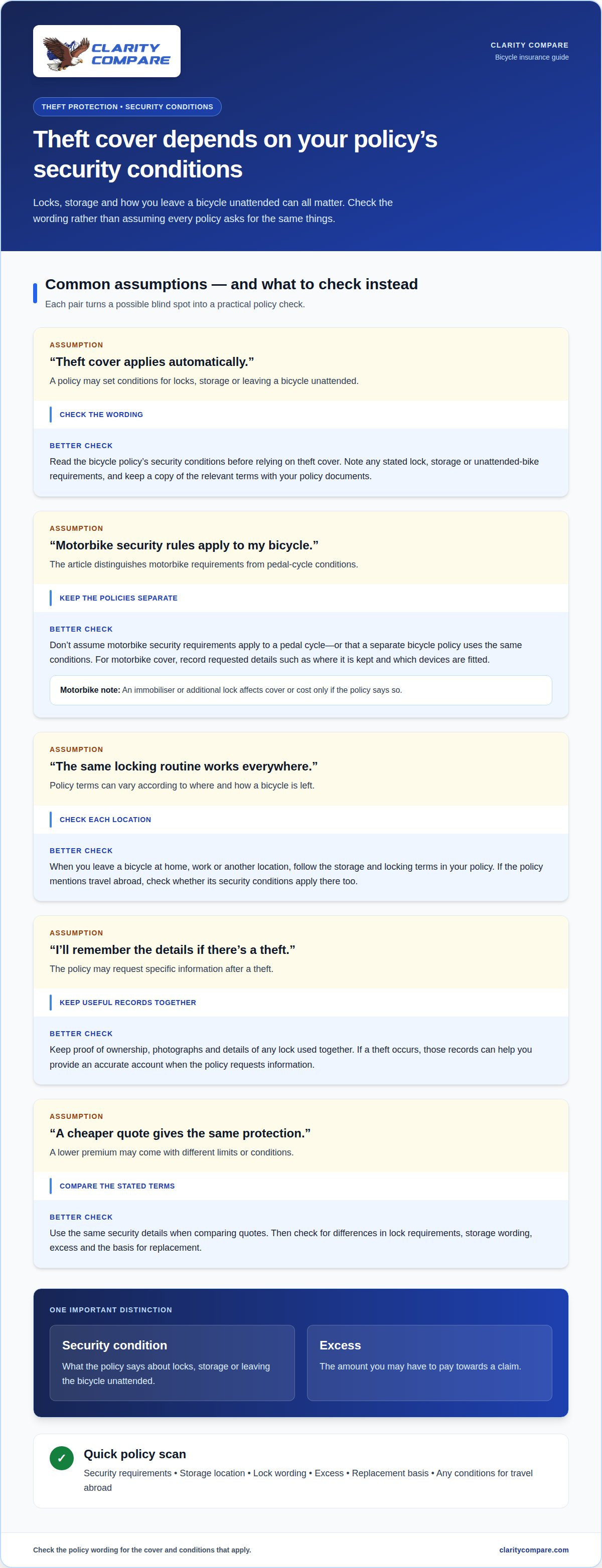
Read the bicycle policy wording to identify its security conditions before relying on theft cover. Note any stated requirements for locks, storage or leaving the bicycle unattended. Keep a copy of the relevant terms with your policy documents. This helps distinguish a condition of cover from the excess, which is the amount you pay towards a claim.
For a motorbike, record the security details requested when arranging cover, such as where it is kept and which devices are fitted. An immobiliser or additional lock affects cover or cost only if the policy says so. Don’t assume motorbike requirements apply to a pedal cycle, or that a separate bicycle policy uses the same conditions.
When you leave a bicycle at home, work or another location, follow the storage and locking terms in your policy. Keep useful records together, such as proof of ownership, photographs and details of any lock used. If the policy requests specific information after a theft, these records can help you provide an accurate account.
Compare quotes using the same security details, then read the relevant policy conditions. Look for differences in lock requirements, storage wording, excess and the basis for replacement. If a policy mentions travel abroad, check whether its security conditions apply there too. Don’t assume a cheaper quote provides the same protection. Compare the stated terms consistently.
Which UK insurers offer cheap bicycle insurance?
There isn’t one UK insurer with the lowest bicycle premium for every rider. Quotes depend on details such as bicycle value, use, location and selected protection. A price for one bicycle and rider won’t show what another person will pay. Policy wording describes the cover attached to each quoted premium.
Bicycle insurance is available through specialist policies and as cover under home contents insurance. A specialist policy may set out bicycle-specific cover, while a contents policy may treat the cycle as part of household possessions. Policies can differ in whether theft away from home, accidental damage and accessories are covered. Policy limits and exclusions also vary between insurers.
Quote details such as bicycle value, use, storage and cover requirements can affect the results. Policy terms commonly specify:
Whether theft is covered at home and away from home.
What lock and storage conditions apply.
Whether accidental damage, vandalism and accessories are included.
The excess and any limits on repairs or replacement.
Whether the policy covers the locations where you ride or store the bicycle.
A cheaper quote can provide less cover or have different conditions. For instance, a lower premium may come with a higher excess or narrower theft protection. Quotations can differ in their cover features, making the terms and conditions relevant to the price.
Insurers’ claims processes and renewal terms also vary. A policy may specify what evidence is needed for a theft or damage claim and whether it renews automatically. Home policies can have bicycle-specific limits and exclusions. These details describe the cover available for a bicycle and how it is used, alongside the initial price.
Clarity Compare
Clarity Compare introduces users to reliable insurance comparison services to help find affordable bike insurance. After reviewing bicycle policies, you can use Clarity Compare to access comparisons for other insurance needs.
If you’re reviewing insurance beyond bicycle cover, Clarity Compare introduces you to trusted comparison options for home, travel, car and pet insurance. Clarity Compare helps facilitate the service but does not provide it directly. It doesn’t replace reading the policy terms or provide regulated financial advice.
Use the button below to visit our recommended insurance comparison service. Clarity Compare may receive a fee or commission for referrals.
Make your next insurance decision with clarity
Turn your priorities into a clear basis for choosing cover. Decide what matters most for your bicycle and how much flexibility you need if circumstances change. This keeps your search for affordable bike insurance focused on value and suitability, not price alone.
For other insurance needs, Clarity Compare lets you compare car, travel and home insurance. Reviewing those options can help you organise cover for different parts of life while keeping each policy decision distinct.
If you’d like to explore your wider insurance options, contact Clarity Compare. A clear view of your priorities is a practical place to begin.
Frequently Asked Questions
What is bike insurance?
Bike insurance is a policy that protects a bicycle against losses specified in its terms. Depending on the cover, this may include theft or damage, with other protections available as additions. For example, cover may include theft away from home or repair or replacement costs. The policy wording defines what is insured.
What additional cover options are available?
Some bicycle policies offer personal accident cover or protection for riding gear, such as a helmet. These options address different needs: gear cover relates to equipment, while personal accident cover relates to injury. Policy terms specify who is insured, which items qualify and what exclusions apply. Accessories may be covered with the bicycle or require separate protection.
What does UK bicycle insurance cover?
UK bicycle insurance can cover theft, accidental damage or vandalism when these risks are included in the policy. Cover may also depend on where the bicycle is kept and how it is used. For example, policy terms may cover a bicycle during transport, while others may cover it only while stored or being ridden. Limits and exclusions define the overall cover.
How much does affordable bike insurance cost in the UK?
There isn’t one standard premium for affordable bike insurance in the UK. Your bicycle’s value, how you use it, the protection you choose and your security arrangements all influence the quote. A higher-value bicycle can cost more to replace, which may affect the premium. Premiums, excesses, insured values and exclusions vary between quotations.
What security locks and storage conditions do UK bike insurers require?
Requirements vary by policy, and insurers may set different lock and storage conditions. For example, terms may distinguish a bicycle kept inside your home from one left in a shared building or at work. Policy wording may include rules for locking a bicycle when unattended and requirements for evidence of the lock and storage arrangements.
How do I insure an e-bike in the UK, and what legal limits apply?
Insurance terms for e-bikes may depend on the bicycle’s motor assistance and intended use. The stated UK electric-bike definition sets a maximum motor-assisted speed of 25 km/h and a minimum rider age of 14 years. E-bikes outside those limits may not be described by a standard bicycle policy. Vehicle classification and insurance terms vary.