A lower quote isn’t always a closer match for the cover you need. Car insurance comparison sites show quotes from insurers based on the details you provide, so prices and policy features can vary between results.
It’s understandable to focus on the quoted price, especially when renewal costs feel unpredictable. But the excess, level of cover, exclusions and optional extras also affect how useful a policy may be. Comparing these details alongside the premium provides information about differences between policies.
This guide explains what car insurance comparison sites can show and why quotes differ. You’ll learn how insurers and cover details may differ, which details can affect a quote, and factors that can affect your premium. It also explains how comparison-site tests work and what their results can, and can’t, tell you.
Key Takeaways
- Quote results depend on the details supplied, and quoted premiums may vary alongside cover and excess levels.
- Customer ratings and claims figures can add context, and each measure represents different information about insurers.
- Cover needs and payment methods can affect insurance costs.
- Comparison-site tests use specific driver profiles, so their results may not reflect every motorist’s circumstances.
Quote prices returned by comparison sites
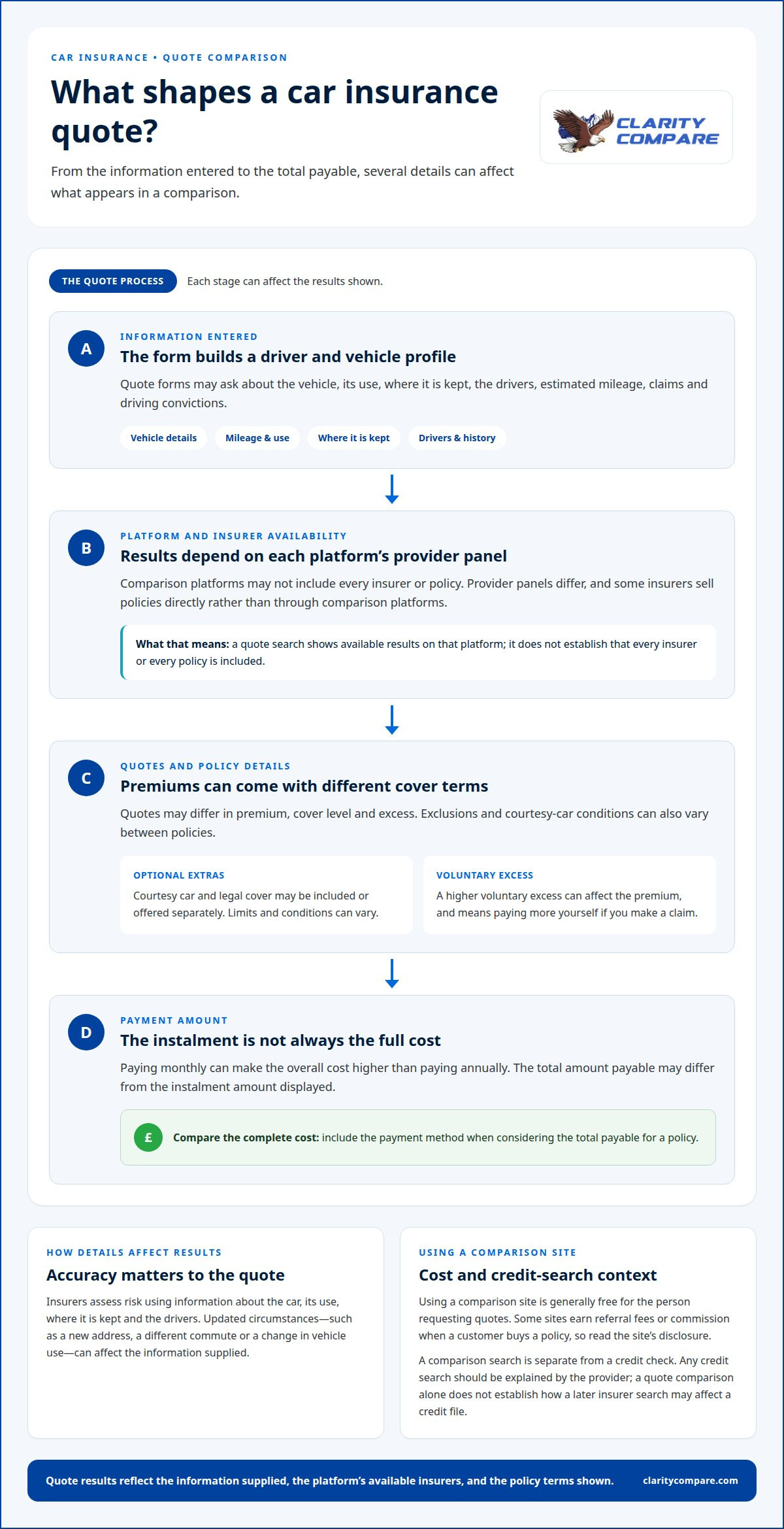
Car insurance comparison sites return quotes based on the details entered and the insurers available on each platform. Results may include different levels of cover and premiums.
Quote Comparison Options
UK drivers can use online quote forms, and some insurers also provide quotes by telephone. Car and van insurance are separate products, and quote forms ask for details about the vehicle and its use. Clarity Compare is one comparison option, but there is no single official ranking of UK sites by popularity.
Optional extras, such as courtesy car and legal cover, may be included or offered separately. Their limits and conditions can vary. Policy options and terms may also change over time or with a customer’s circumstances.
Providers and Insurer Coverage
Comparison platforms may not include every insurer or policy. Provider panels differ, and some insurers sell policies directly rather than through comparison platforms. There’s no reliable insurer-count figure here to show which UK site compares the most providers.
Quotes can vary according to the details provided and the cover levels shown. Policy terms may include different excesses, exclusions and courtesy-car conditions. EUI Limited is registered in the United Kingdom under company number 02686904, according to Companies House. A named insurer’s appearance on a platform does not mean every policy it offers will appear.
Quote Details and Site Costs
Quote forms may ask for the vehicle registration or make and model, estimated mileage, where the car is kept, how it’s used, and details of all drivers. They may also ask about claims and driving convictions. These details are used in the quote process.
Using a comparison site is generally free for the person requesting quotes. Some sites earn referral fees or commission when a customer buys a policy, so read the site’s disclosure. A comparison search is separate from a credit check, and any credit search should be explained by the provider. A quote comparison alone doesn’t establish how a later insurer search may affect a credit file.
Customer ratings and insurer claims figures
Customer ratings and claims figures provide a different perspective from a quote’s premium. Ratings summarise reported customer experiences, while claims data describes how an insurer handles claims. Both provide context alongside policy wording. A high rating alone doesn’t show whether the excess or exclusions suit a particular person.
Ratings may be presented with a date, sample size and subject. A score about buying or renewing a policy may not reflect a customer’s experience making a claim. Written comments can describe communication, claim handling or delays, while a headline score provides a summary.
Claims figures can measure different things. An acceptance rate concerns claims accepted, while a settlement figure may describe payments made. These measures don’t mean the same thing. The insurer, reporting period and whether the figure covers motor claims specifically are relevant context.
- Measure: ratings and claims statistics may refer to different things across insurers.
- Context: figures may be shown with a date, sample size or reporting period.
- Policy terms: the excess, exclusions and claim conditions are separate from rating information.
An insurer’s claims record is different from a comparison platform’s customer feedback. A platform can provide access to quotes, but the insurer handles the policy and its claims. For example, a positive comment about a straightforward quote process doesn’t show how that insurer would handle a complex vehicle repair claim.
Ratings provide one kind of information, while policy details and claims measures provide others. Quotes with similar cover may still differ in customer feedback and in how claims measures are described. For a specific driver profile, you can also compare car insurance options alongside the policy details.
Guidance for reducing insurance costs
Start with accurate details. Insurers assess risk using information about the car, its use, where it’s kept and the drivers. If your estimated annual mileage is higher than your expected use, correct it before requesting quotes. A realistic figure matters more than choosing an answer simply because it looks cheaper.
Review the cover before changing the excess. A higher voluntary excess can affect the premium, but it also means paying more yourself if you make a claim. Compare otherwise similar policies and consider whether you could afford each excess. Don’t reduce cover or increase the excess solely to lower the quote.
Your payment method can also affect the total cost. Paying monthly can make the overall cost higher than paying annually. Compare the full amount payable, not just the instalment shown. If monthly payments suit your budget better, include that extra cost when weighing the policy against other quotes.
- Check your details: correct the vehicle use, mileage and driver information if anything has changed.
- Review optional cover: remove extras you don’t need, but retain features that matter to your circumstances.
- Compare like for like: keep the cover level, excess and payment method consistent across quotes.
Consider where the car is kept and who drives it. If it’s usually parked off the road overnight, enter that accurately; don’t describe a driveway as a garage. If a named driver no longer uses the vehicle, update the driver details rather than leaving outdated information in place. Every answer should reflect the actual arrangement.
Revisit your cover when circumstances change, such as a new address, a different commute or a change in vehicle use. Compare the full policy terms as well as the premium. The lowest quote may exclude cover or have an excess that affects its overall value. Choose the policy details that fit your needs, not just the smallest figure on screen.
How car insurance comparison sites were tested
A 2025 comparison-site test used one driver profile: a 40-year-old father of two. This gives the results a clear reference point, but not a universal answer. Quotes can change when a driver’s age, address, vehicle, mileage or circumstances differ. Treat the test as a snapshot of how sites performed for that profile, not a forecast of your own premium.
A controlled comparison keeps driver details consistent across sites. This makes differences in returned quotes easier to examine, although the driver profile still shapes the outcome. A young driver or someone with a different driving history, for example, may see different results. A test can’t show how every platform responds to every driver type or whether a site includes every insurer.
The test findings describe the comparison process, not just the lowest figure shown. They may indicate whether results make cover details clear and allow policy features to be distinguished. A lower quote may reflect differences in cover, excess or optional extras. If the test doesn’t explain those differences, its price ranking says little about like-for-like value.
- Profile tested: the driver’s age and family details formed part of the test.
- Scope: the results cover only the sites and details actually examined.
- Limitations: the findings reflect the test profile and do not predict results for other circumstances.
The key takeaway is simple: the test profile makes a useful controlled example, but represents one set of circumstances. A test conducted in 2025 also describes results from that test period, rather than guaranteeing today’s quotes. If your details differ from the profile, the comparison describes what was examined, not what your result would be.
The test’s scope and limitations mean its results apply only to the profile and period examined. Car insurance quotes and cover details are not assessed by this test for other circumstances.
Clarity Compare
Clarity Compare introduces Quotezone.co.uk, which provides access to its FCA-regulated insurance comparison service. Clarity Compare may receive a fee or commission for referrals. Policy wording sets out details of car cover, including excesses, exclusions and optional extras. A quote is a starting point; the policy wording explains what the cover includes.
Clarity Compare also provides access to comparisons for home, travel and pet insurance. The comparison service is online, and you remain in control of your choice. It doesn’t provide regulated financial advice. Explore your options with Clarity Compare.
Make your next comparison count
Your insurance needs can shift as your household, driving routine or vehicle changes. When they do, update the details you use for a quote so the comparison reflects your current circumstances. Keeping a clear record of what matters to you, such as how you use your car and which policy features you value, can make future decisions easier.
Car insurance comparison sites are one way to explore quotes, but the next step is deciding what you want to compare. Clarity Compare provides access to Car Insurance options, as well as Travel Insurance and Home Insurance. You remain in control of your choice, and the comparison service doesn’t replace regulated financial advice.
We have partnered with Quotezone.co.uk to provide access to its FCA-regulated insurance comparison service. We may receive a fee or commission for referrals. If you’re ready to explore your options, Contact Clarity Compare. Take the next step at your own pace.
Frequently Asked Questions
How much can I expect to pay for my car insurance?
There isn’t one price that applies to every driver. Insurers calculate quotes using details such as the vehicle, its use, the people insured and the cover selected. Changing from social use to regular commuting, for example, can affect a quote. Any early figure relates to the details entered, while policy information can differ between quotes.
What factors affect my car insurance price?
Your car insurance price reflects how an insurer assesses the risk of covering your circumstances. Relevant details can include the car’s model, where it’s kept, annual mileage, driving history and who will drive it. Cover choices matter too. For example, a policy with additional protection may cost more than one with fewer features, even for the same car.
How do professionals compare car insurance quotes in the UK?
Professionals compare quotes using consistent driver and vehicle information, and consider the policy terms behind each result. Differences between quotes can relate to cover as well as price. For instance, two quotes may look similar until an excess or exclusion changes what a driver would pay or receive after a claim. Comparison sites provide results, not personalised financial advice.
How much does car insurance cost in the UK, and what affects the price?
Car insurance costs vary by driver and policy, so a general figure may not reflect an individual quote. Insurers assess details including vehicle type, driving history, location, mileage and intended use. The cover level and selected extras also affect the premium. Prices are based on the circumstances and details provided.
What should a professional check before arranging a policy through a comparison site?
Information in a quote can include details about the vehicle, drivers and intended use, as well as the policy start date, excess, exclusions, included features and payment terms. For example, a quote may specify whether a named driver is covered for the car’s stated use. Inaccurate details can result in a mismatch between the quote and policy.
Which car insurance comparison sites are popular in the UK?
Quotezone is one comparison option, but there is no single official ranking of UK sites by popularity.