For car insurance for new drivers in the UK, Third Party Only is the legal minimum. It covers injury or damage caused to others, but not damage to your own car. Third Party, Fire and Theft also covers your car if it is stolen or damaged by fire. Comprehensive cover can include damage to your car after an accident, subject to the excess and policy terms.
A parent or relative can be a named driver if they genuinely drive the car occasionally. The person who uses it most must be named as the main driver. Misrepresenting this can amount to illegal fronting and may invalidate the insurance. This guide explains how to compare cover based on how you use the car, how named-driver and black box policies work, and how driving experience, the vehicle and expected mileage can affect your options. These factors help you assess options before comparing quotes, but no single policy suits every new driver.
Key Takeaways
- Black box cover uses telematics data about driving behaviour to assess or price risk; understand how the policy uses this information before choosing it.
- Third Party Only is the legal minimum, while Third Party, Fire and Theft and comprehensive cover protect against additional risks.
- A parent can be a named driver if they genuinely drive the car, but the person who drives it most must be declared as the main driver.
- Comparing quotes can help you see how cover options and policy details differ for your circumstances.
How do black box policies work for young drivers?
Black box insurance uses telematics data about driving behaviour to assess risk. For young drivers, this gives insurers information about individual driving, rather than relying only on general assumptions about age or experience.
Black Box and Telematics Cover
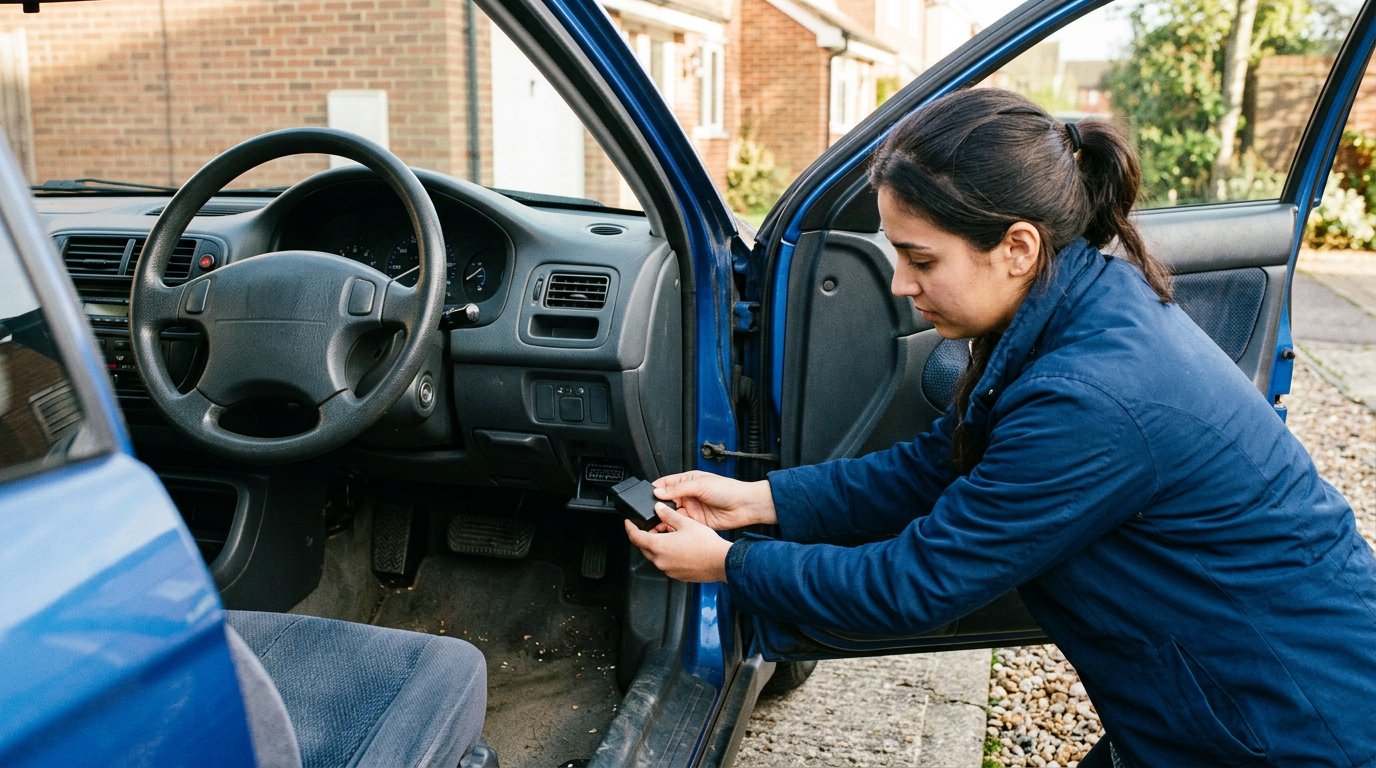
A black box policy uses a device or telematics service to collect information about your driving. Telematics is the broader term for using driving data in insurance. Policy terms explain what information is collected, how it may affect your cover and whether you need to follow instructions for using the device or service.
A car insurance comparison service can show UK quotes and policy conditions side by side. Telematics policies can differ in how they use driving data and in their cover conditions.
Telematics Data and Cover
Insurers use driving behaviour data to assess risk. A new driver’s recorded behaviour may inform that assessment, but black box cover doesn’t guarantee any particular outcome. Policies can differ in their cover and conditions as well as their use of telematics.
Policy terms explain when your cover might be affected and what happens if driving data isn’t recorded. They also describe how the insurer uses the information and how it relates to your cover.
Quotes can be compared using the same driver, vehicle and usage details. Clarity Compare lets you compare quotes from UK insurers and review policy differences side by side.
For car insurance for new drivers, a no-claims discount is another factor to understand. UK insurers commonly assess no-claims bonuses in yearly increments, so drivers may typically start building a no-claims record after 12 months.
After an accident, tell your insurer and follow its claims process. Keep the incident details available when reporting it. Under section 143 of the Road Traffic Act 1988, drivers need compliant insurance to use a vehicle on a road or other public place, according to UK Government, legislation.gov.uk. Car insurance quotes for new drivers can include cover terms alongside telematics features.
What type of insurance do young drivers need?
Insurance cover depends on what you want protected, how you use the car and who is insured to drive it. Named-driver options and policy extras can change the scope of cover, so policy terms and cover labels can differ.
Cover Features and Optional Extras
Third Party Only covers other people, while Third Party, Fire and Theft also covers your car if it is stolen or damaged by fire. Comprehensive cover can also cover damage to your car after an accident, subject to the excess and policy terms.
Comprehensive insurance and Third Party Only provide different levels of cover. Insurers assess risk differently, and cover terms vary. The excess is the amount you may need to contribute towards a claim.
Optional extras vary between policies. Policies differ in what they include and the conditions that apply. If you’re considering breakdown assistance, for example, its terms explain which situations it covers. An extra may not be included in every policy.
If you’ll drive a parent’s car, named-driver conditions and the policy terms set out how the car can be used. The car’s owner may have different protection needs after an incident. The insurer’s documents explain how claims involving different drivers are handled.
Legal Insurance Requirements
Before driving on a UK road or other public place, you need a compliant insurance policy that covers the vehicle and your circumstances. A driving licence alone doesn’t provide insurance. The policy must be active and apply to you before you set off.
For learner or newly qualified drivers, the policy should reflect their status and how they use the car. The certificate and policy wording set out which vehicle and drivers are covered and whether any restrictions apply. If the car or its use changes, the insurer needs accurate details so the cover reflects the new circumstances.
Parent policies with a child as a named driver
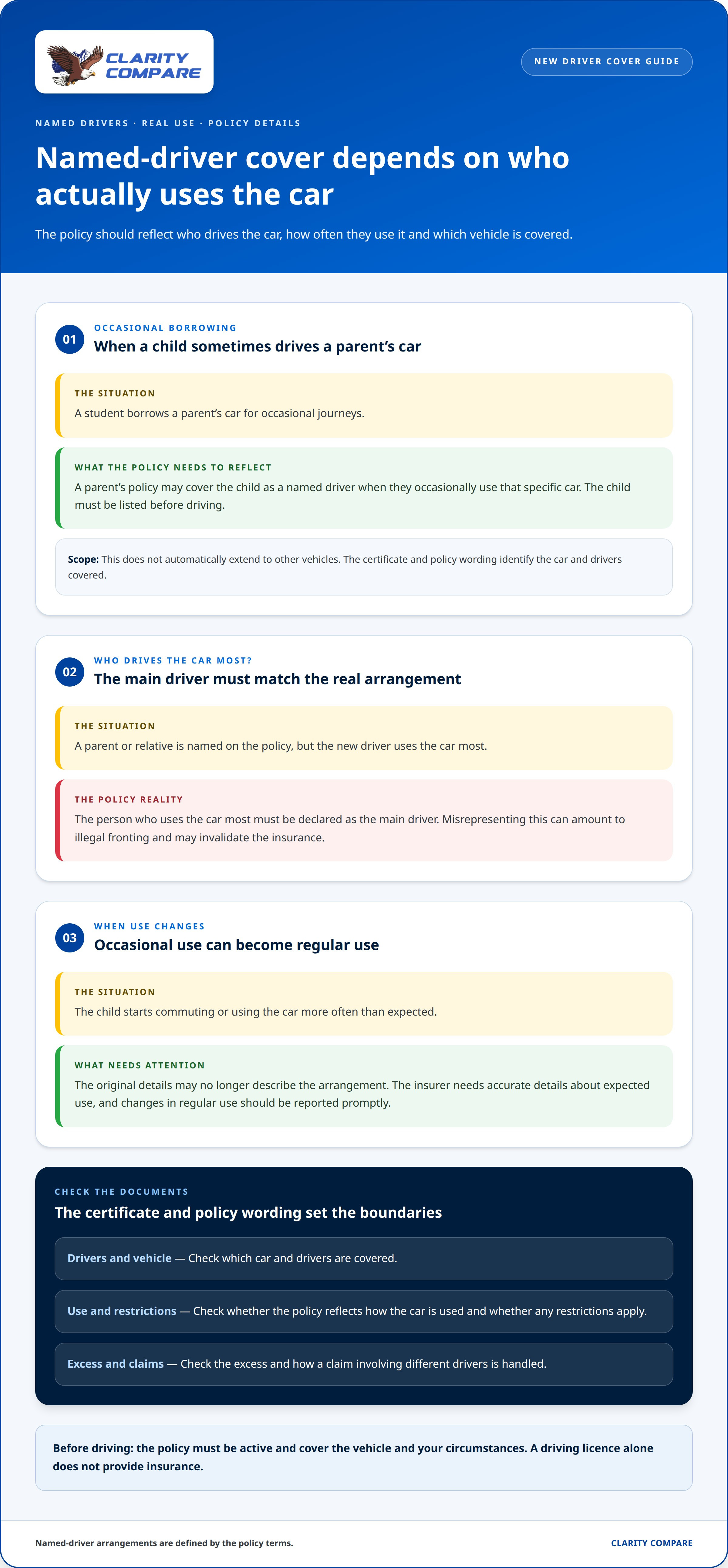
A parent’s policy may cover a child as a named driver when they occasionally use that specific car. For example, a student borrowing a parent’s car for occasional journeys may be covered under the policy’s named-driver terms. This doesn’t automatically extend to other vehicles. The certificate and policy wording identify the car and drivers covered.
Before the child drives, the policy must list them as a named driver, and the insurer needs accurate details about their expected use. If occasional borrowing becomes regular, the original details may no longer describe the arrangement. For example, tell the insurer if the child starts commuting in the car.
Check the cover that applies when the child is driving, including the excess and any restrictions. The excess is the amount payable towards a claim under the policy. If the child has an accident on a covered journey, the policy terms explain how the claim is handled and which excess applies. The parent should understand these terms before lending the car.
Adding an experienced family member as a named driver can affect how an insurer assesses a policy. Insurers consider the information provided, including each driver’s experience and expected use of the car. Compare the resulting cover and conditions, and check how each driver’s use of the car is described.
Agree within the family when the child can use the car, who keeps the keys and how you’ll report any change in regular use to the insurer. If the child starts using the vehicle more often than expected, update the details promptly. This keeps the policy aligned with how the car is actually driven, rather than an outdated description of occasional borrowing.
Clarity Compare
Clarity Compare gives UK drivers a way to explore car insurance quotes when they’re considering cover for a new driver. Its online comparison platform provides access to quotes from 150+ UK car insurance providers. You can use it to review available options based on the information entered, rather than relying on assumptions about age or driving experience alone. It’s a practical next step when you want to see a range of quotes in one place.
Clarity Compare’s comparison journey follows three stages: “Enter Your Vehicle Details”, “Compare Panel Offers Side-by-Side” and “Choose Cover & Drive Confidently”. Enter your details, review quotes and decide whether to proceed. Read the information shown with each option carefully, as the quote and policy terms are central to your decision.
Clarity Compare provides access to its comprehensive insurance comparison service. Clarity Compare may receive a fee or commission for referrals. The comparison service is online, so you can review the options at your own pace. Clarity Compare does not provide regulated financial advice or underwrite insurance policies.
Review the information displayed to understand what each quote covers. If your details change, update them so the comparison reflects your circumstances. Quotes depend on the information you provide and the options returned through the service. You decide whether to proceed, and the insurer’s policy documents set out the cover and conditions.
Clarity Compare can help if you’re exploring cover for the first time, reviewing your circumstances or comparing insurers. You can view available quotes, then read the policy information to understand each option’s terms before deciding what suits your needs. This webpage is for editorial purposes and is not financial advice.
For general enquiries, contact Clarity Compare.
Frequently Asked Questions
How does age affect the cost of car insurance?
Age can influence how insurers assess risk, but it isn’t the only factor. UK drivers aged 17 to 24 are generally considered young drivers, while drivers aged 25 and over generally aren’t, although limited experience can still affect premiums. For example, a newly qualified driver in their late twenties may still face higher quotes than an experienced driver of the same age.
Why is it right for new drivers?
Black box cover may suit a new driver who wants driving behaviour to form part of the insurer’s risk assessment. Because it uses telematics information, the policy terms matter as much as the device itself. Read how the insurer uses recorded data and how it relates to your premium. It isn’t automatically suitable for every driver or journey.
What is the best insurance strategy for 17 and 18 year olds?
Start by matching the policy to who owns and mainly drives the car, then compare the available cover and conditions. A 17-year-old who has just passed their test and drives their own car needs details based on that use. If an 18-year-old only borrows a parent’s car occasionally, a named-driver arrangement describes a different situation.
Can extra driving courses help?
Extra lessons or a driving course can build experience in areas such as motorway driving, night journeys and handling unfamiliar roads. That practical experience can support safer, more confident driving. Course completion doesn’t count as a year of no-claims history, though. Insurers commonly assess no-claims bonuses in yearly increments, with reductions typically starting after 12 months.
Can you negotiate car insurance?
You can ask an insurer to review a quote if a detail is incorrect or your circumstances have changed. For example, correcting the car’s annual mileage or usual overnight parking location may change the information used to assess the risk. You can also compare quotes and policy terms, then decide whether different cover or an excess suits your needs.
Does car insurance go down after 6 months?
There’s no standard six-month point when a premium automatically falls. A no-claims bonus is commonly assessed in yearly increments, so a new driver typically starts building one after a claim-free year. At renewal, the insurer can reassess the driver, car and policy details. Compare your renewal terms with other quotes before deciding whether to continue.